Protect the Joints Between Roofing and Other Materials
Flashing forms part of the water-shedding detail where a roof meets a wall, chimney, skylight or another interruption in the covering. Repair needs to consider that connection, not only the visible metal. Describe any leak, loose flashing or previous sealing. The contractor should identify the affected components and explain how they connect to nearby roofing or wall materials. A recurring problem at the same joint deserves assessment before more sealant is added.
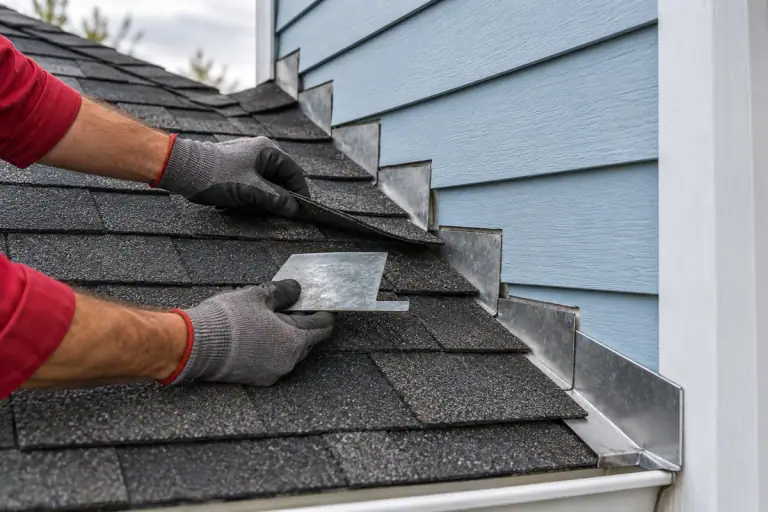
A close view of hands checking the shingle and step-flashing overlap at a sidewall.
AI-generated illustrations, not photos of listed contractors or completed SkyCrest projects. Images do not establish local service coverage.
Signs of a Roof Flashing Problem
- Leaks near a wall, skylight, or roof junction
- Loose, lifted, or visibly damaged flashing
- Repeated sealing around the same problem area
What Roof Flashing Repair May Include
- Assess the joint, water path, and surrounding materials
- Discuss repair or replacement of affected flashing components
- Check how the detail connects to roofing and wall coverings
Flashing Replacement or a Limited Seal Repair?
The scope may require lifting adjacent roofing or accessing part of a wall covering. Ask what will be disturbed and restored, and whether the proposed repair addresses the whole water-shedding detail. Chimney-related flashing has additional junctions and can be discussed separately if that is where the concern is located.
What Affects Roof Flashing Repair Costs?
- The type and number of affected roof junctions
- Flashing material and extent of replacement
- Access beneath roofing or wall covering
- Associated damage and restoration of disturbed materials
Pricing depends on the assessed work and the independent contractor. Confirm any assessment charges, written scope, exclusions and payment terms before arranging a visit or approving repairs.
Questions to Ask Before Hiring
- Which flashing components are included in the repair?
- Will adjacent roofing or wall materials need removal?
- Is this a component replacement or a temporary seal?
Planning Roof Flashing Repair
Roof flashing repair concerns the details at roof junctions and penetrations that help direct water away from vulnerable openings. The contractor should identify the specific detail, assess adjacent materials and explain whether the repair renews that assembly or provides only a temporary surface treatment.
Identify the Junction Rather Than Requesting Generic Sealing
When explaining the concern, name the visible location if known: a wall intersection, valley, vent, skylight or another roof transition. Mention any nearby indoor moisture and the timing of previous repairs. Do not assume that a bead of sealant visible from the ground is the complete flashing assembly. Ask the assessor which components make up the detail and what observations support the proposed repair. If the source of water is still uncertain, discuss whether leak investigation is needed before selecting a flashing scope. The useful starting point is a specific junction and observed defect, not a blanket request to seal everything on the roof.
Discuss How the Detail Relates to Surrounding Materials
Ask how the proposed work connects to the roof covering, adjoining wall or penetration and underlying materials. A repair at a junction can involve more than the visible metal piece, so clarify what needs to be opened, replaced or retained. Ask whether earlier work complicates the assessment and whether another trade needs to examine an adjoining surface. The contractor should use the requirements for the actual materials and design; this page does not prescribe dimensions or a universal installation sequence. A clear explanation of the interfaces helps you understand why two proposals may differ even when they both describe the same flashing location.
Distinguish Renewing an Assembly From Applying Sealant
Ask what function any proposed sealant performs and which components remain in place. Some proposals may involve replacement or reconstruction of a detail, while others offer a limited surface treatment. The scope should make that distinction clear without suggesting that all sealant use is automatically wrong or that it resolves every defective assembly. Ask about the expected limitations of the proposed method and whether further work is recommended. If temporary treatment is offered because weather prevents other work, request a follow-up arrangement. Product choice and suitability require assessment at the property. The homeowner should be able to describe what they are approving beyond the phrase 'repair flashing'.
Assess Nearby Deterioration and Earlier Repairs
A flashing concern may sit beside worn covering, damaged wall material or a previous patch. Ask the contractor to distinguish the identified defect from unrelated wear and explain which nearby items must be addressed for the repair to work as intended. If hidden materials become visible during the job, agree on how findings will be documented and how additional work is approved. Do not assume the original proposal includes every adjoining component unless it says so. Equally, do not treat all discoloration or old sealant as proof of a specific failure. A well-defined repair boundary should follow assessment findings and acknowledge areas that could not yet be examined.
Clarify Responsibilities at Windows, Walls and Equipment
If the detail meets a skylight, wall finish, vent or other installed component, ask whether the roofing contractor handles all associated work. Replacement of an accessory or repair of wall finishes may involve separate scope and expertise. Tell the assessor if equipment or another trade's installation is nearby, and discuss coordination before the roof is opened. Do not assume that a flashing repair includes removal and reinstatement of every adjoining feature. Ask who protects the opening and who is responsible if an additional component needs assessment. Clear trade boundaries reduce the risk of an unfinished detail being left between separate contractors with neither accepting responsibility for the complete interface.
Evaluate a Proposal by the Identified Detail
A useful proposal describes the location, components, material approach, adjoining work and any finish or cleanup included. Ask for clarification when the price covers an unspecified number of penetrations or uses a single general phrase for several different details. Consider access, roof material and the need to remove nearby covering when comparing costs. A less expensive proposal may retain components that another proposal replaces. That difference should be explained rather than judged only by the total. SkyCrest Roofing does not set prices or endorse a particular installation method. Confirm charges and written terms with the independent contractor after the actual junction has been assessed.
Ask How Completion Will Be Documented
Request an explanation of the work completed and photographs where available, particularly if most of the detail is difficult to see from the ground. Ask how the contractor checks the assembly and whether any follow-up is included. If the original symptom was an indoor leak, discuss how renewed moisture will be reported and whether interior work is separate. Keep the material and workmanship documents alongside the repair record. A photograph can document visible work but does not guarantee every concealed component is correct. Completion should combine the agreed scope, observations and written responsibilities rather than rely on a promise that one roof detail can never develop a future problem.
Keep Chimney-Specific and General Flashing Topics Distinct
This page concerns roof junctions and penetrations generally. The chimney flashing guide focuses on the particular roof-to-chimney interface and coordination with masonry assessment. Use leak repair when the water-entry cause remains unidentified, and inspection when several roof details require review. A property may involve more than one concern, but the proposed work should identify which components are involved and avoid overlapping charges for the same repair. The service names on this website organize information; they do not establish a defect or determine how a contractor must price the job. A specific, evidence-based scope is more useful than selecting every related roofing label at once.
Further Reading
These independent educational references are not endorsements of SkyCrest Roofing or evidence of contractor coverage. This guide is general homeowner information, not a diagnosis or a contractor's written proposal.
Roof Flashing Repair FAQs
Can every flashing leak be fixed with sealant?
No. Sealant does not replace missing components or correct every problem in a roof junction. Ask whether the flashing needs replacement and how the proposed work addresses its connection to surrounding materials.
Does flashing repair require removing shingles?
Sometimes. Access may require lifting or removing nearby covering. The contractor should explain which materials will be disturbed, whether they can be reused and how the area will be restored.
Is chimney flashing the same as other roof flashing?
It serves a related water-shedding purpose but has specific junctions around the chimney. Leaks there can also involve masonry or chimney components, so a chimney-specific assessment may be needed.
Request Roof Flashing Repair Availability
Share your property city and state, local area and roof concern with SkyCrest Roofing. Call the number in the header or footer to discuss your property. Contractor availability, assessment charges and work arrangements must be confirmed separately.
This is general roofing information, not an inspection or diagnosis of your property. The selected contractor should assess the roof before recommending work.
Related Roofing Services
Discuss your roof by phone
Call to discuss your roofing concern and confirm contractor availability for your property.
- Roofing service
- Roof Flashing Repair
Have these details ready
- Your property city, state and local area
- The roof material and visible concern, if known
- When you noticed the issue and your preferred timeline
Confirm assessment charges and work arrangements with the independent contractor. A call does not guarantee an appointment or coverage.