Identify the Cause of a Leak Around the Chimney
Water appearing near a chimney does not automatically mean one strip of flashing is the only problem. The roof-to-chimney junction, surrounding covering and chimney components need to be considered. Describe where moisture appears and any previous sealing or repairs. The contractor should explain which parts fall within roofing work and whether a chimney or masonry specialist is also needed. That distinction helps avoid agreeing to flashing work that leaves another source of moisture unresolved.
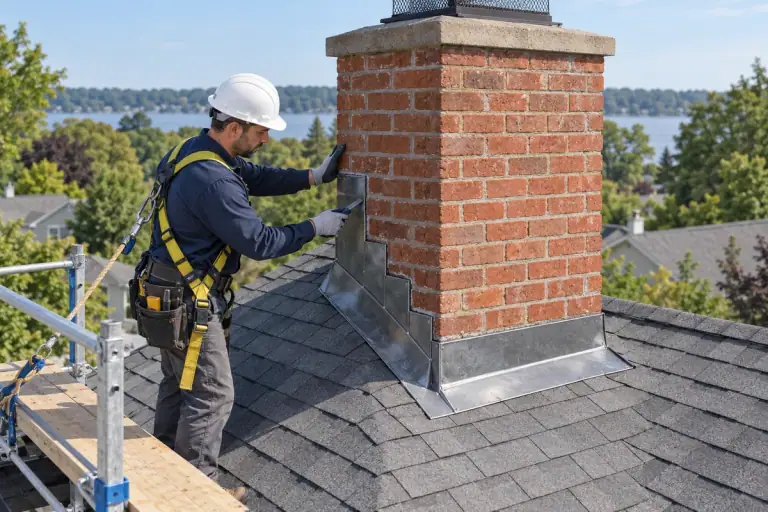
A worker inspecting the metal flashing around a brick chimney.
AI-generated illustrations, not photos of listed contractors or completed SkyCrest projects. Images do not establish local service coverage.
Signs of a Chimney Junction Problem
- Moisture appearing near the chimney inside the home
- Loose or damaged metal around the chimney base
- Recurring sealing at the roof-to-chimney junction
What Chimney Flashing Repair May Include
- Review chimney junctions and accessible surrounding roofing
- Assess base, step, and counterflashing details as applicable
- Separate roofing work from chimney or masonry repairs if needed
Separate Flashing Work from Other Chimney Repairs
Ask which sides of the chimney are included and whether roofing or masonry will be disturbed. Water entering through another part of the chimney may require additional assessment. A contractor should not assume that every nearby leak can be solved by replacing one visible strip of flashing.
What Affects Chimney Flashing Repair Costs?
- Chimney size, roof position and safe access
- The junctions and flashing components affected
- Removal and restoration of nearby roofing
- Separate masonry, chimney or concealed damage repairs
Pricing depends on the assessed work and the independent contractor. Confirm any assessment charges, written scope, exclusions and payment terms before arranging a visit or approving repairs.
Questions to Ask Before Hiring
- Is the leak coming from the roof junction or another chimney component?
- Which flashing details will be replaced or repaired?
- Will a chimney or masonry specialist also be needed?
Planning Chimney Flashing Repair
Chimney flashing repair addresses the roof-to-chimney junction identified during assessment. Moisture near a chimney can have more than one possible source, so a repair should distinguish the junction from masonry, chimney-top and indoor restoration work. Ask for a documented diagnosis, defined repair boundary and clear responsibility for any separate work.
Describe the Moisture Pattern Without Assuming the Cause
Record when the moisture appears, which accessible indoor area is affected and whether the pattern has changed after earlier work. Photographs taken safely indoors can help explain the history, but a stain beside a chimney does not by itself identify a flashing defect. Tell the assessor about previous roof repairs and any separate chimney work. Avoid climbing onto the roof or entering unsafe attic areas to gather evidence. Ask which parts of the roof and chimney junction will be checked and whether another trade may be needed. The enquiry should describe what you have observed, leaving the cause to an assessment rather than a guess from the room below.
Distinguish Flashing From Other Chimney Components
Ask the contractor to identify the specific component behind its recommendation. Work at the roof junction is different from repairs to chimney masonry, the upper chimney structure or an appliance-related problem. A broad description such as 'chimney leak repair' may leave these boundaries unclear. Request an explanation of what the assessor found, how confident the diagnosis is and which alternative causes remain possible. If the concern involves the chimney itself rather than the roof connection, ask who is qualified to assess that part. A roofing proposal should not imply that unrelated chimney functions have been inspected or made safe unless that work is actually included and appropriately assessed.
Define Which Junction Details Will Be Repaired
A useful scope identifies which sides and components of the roof-to-chimney connection need attention. Ask what will be removed, repaired, replaced or retained, and how the planned work connects to the surrounding roof. Photographs or an annotated assessment can make the proposed boundary easier to understand without requiring you to interpret technical terminology alone. Avoid treating the visible piece nearest a stain as the entire repair by default. Conversely, replacing every junction component should have an explained reason. Request the proposed approach for your roof material and chimney condition rather than assuming one standard detail is suitable for every property.
Ask What Surrounding Material Must Be Disturbed
Accessing the junction can involve adjacent roof materials, and their condition may affect the repair. Ask whether nearby covering must be lifted or replaced and how product compatibility and appearance will be handled. If older material may not tolerate disturbance, discuss that possibility before the appointment becomes a larger job. Find out whether the initial price assumes that surrounding material is reusable and how any additional requirement will be approved. The proposal should also explain how work is left protected if an interruption occurs. Understanding adjacent work helps distinguish a narrow flashing charge from a more complete repair to the affected roof section.
Clarify Masonry Work and Trade Responsibilities
If the assessed repair involves deteriorated chimney surfaces or connections to masonry, identify who will perform each part. Ask whether a separate specialist is required and whether that work is included in the same agreement. Do not assume that arranging a roofer also books all chimney repairs. Where multiple contractors are involved, clarify the sequence, access arrangements and party responsible for resolving questions at the shared junction. Keep separate agreements consistent about the final connection between their work. SkyCrest Roofing is a connection service and does not certify chimney condition, operate the contractors' crews or warrant the combined work of separate trades.
Understand a Sealant Proposal Before Approving It
Ask what role sealant plays in the recommended repair and whether the contractor is proposing a temporary measure, maintenance work or replacement of failed components. A visible bead of material does not establish that the underlying junction is sound, and the reason for the selected treatment should be explained. Discuss the condition that supports the recommendation and what concerns would remain afterward. If a previous treatment failed, share the date and available records so the assessor can consider that history. Do not apply a homeowner surface treatment simply to test a theory about the leak. Access and diagnosis should be handled safely by an appropriate professional.
Separate Roof Repair From Indoor Restoration
Moisture-related ceiling, wall or insulation work may be outside the flashing contractor's scope. Ask who will assess and address the affected indoor materials and how the sequence relates to fixing the water-entry concern. Do not assume painting over a mark proves that the source was resolved, or that a roofing repair automatically includes every interior consequence. Keep photographs and dates so renewed moisture can be distinguished from an old stain. If the affected area presents an immediate safety concern, keep people away and seek appropriate help. The written agreement should describe restoration responsibilities rather than leave the homeowner to discover exclusions after roof work is finished.
Compare Access Costs and Scope Exclusions
Chimney position, roof access, surrounding material and the required repair boundary can affect the proposal. Ask whether access arrangements, material removal and disposal are included. Identify allowances for concealed conditions and request the process for authorizing changes. Compare whether different contractors are proposing the same work before treating their prices as equivalent. A repair to one junction detail and a wider chimney-related project should not be compared solely by their totals. Confirm any assessment charge and payment terms directly. No standard price or guaranteed outcome is offered here because the actual roof and chimney connection must be assessed before the scope is settled.
Agree on Completion Evidence and Follow-Up
Request photographs of the work where practical, a description of the components repaired and the contractor's written terms. Ask how the original moisture concern will be followed up and what to do if it recurs. An absence of visible moisture immediately after completion is not a reason to discard the assessment record. Keep the documents so later changes can be described accurately and any warranty enquiry can be directed to the responsible party. Avoid accessing the roof yourself to inspect the flashing. If the assessment identified unresolved masonry or indoor work, complete those separate arrangements rather than treating the roofing invoice as confirmation that every related concern has been addressed.
Further Reading
These independent educational references are not endorsements of SkyCrest Roofing or evidence of contractor coverage. This guide is general homeowner information, not a diagnosis or a contractor's written proposal.
Chimney Flashing Repair FAQs
Does a leak near the chimney always come from flashing?
No. The roof junction is one possible concern, but chimney components or masonry may also need assessment. Ask the contractor to explain the findings and identify work outside the roofing repair.
What are step flashing and counterflashing?
They are components used in some roof-to-wall and chimney junctions to manage the connection between roofing and adjoining material. The appropriate arrangement depends on the roof and chimney; ask which components your proposal includes.
Is chimney masonry repair included with flashing repair?
Only when the written scope explicitly includes it and the selected contractor can provide that work. Roofing and masonry responsibilities should be agreed separately when different specialists are involved.
Request Chimney Flashing Repair Availability
Share your property city and state, local area and roof concern with SkyCrest Roofing. Call the number in the header or footer to discuss your property. Contractor availability, assessment charges and work arrangements must be confirmed separately.
This is general roofing information, not an inspection or diagnosis of your property. The selected contractor should assess the roof before recommending work.
Related Roofing Services
Discuss your roof by phone
Call to discuss your roofing concern and confirm contractor availability for your property.
- Roofing service
- Chimney Flashing Repair
Have these details ready
- Your property city, state and local area
- The roof material and visible concern, if known
- When you noticed the issue and your preferred timeline
Confirm assessment charges and work arrangements with the independent contractor. A call does not guarantee an appointment or coverage.